Do You Want To Get Closer To Allah and Become A Better Muslim?
"Balance Your Dunya and Deen by Learning the Quran and Teachings Of Islam From Al Furqan Academy"
With One to One LIVE Online Classes..."
Do You Want To Get Closer To Allah and Become A Better Muslim?
"Balance Your Dunya and Deen by Learning the Quran and Teachings Of Islam From Al Furqan Academy"
With One to One LIVE Online Classes..."
Join Our Program Now...
I want to take initiative for my Deen and learn Quran with proper Tajweed!
YES! TAKE THE 3 DAY FREE TRIAL! You pay only $2.5 per class 1-on-1 live ($50 per month)
Its All About Balance, The Key To Success....
From:
Al Furqan Academy
Karachi, Pakistan
Truth be told; our lives are imbalanced...
The hierarchy of our priorities is shelved in a pyramid of confusion, disorder and societal pressure through which we deem what’s most important in the world.
We forget the fact that Quran, Namaz and Islam are the most imperative factors in our life, they define who we are.
Instead, we slave all day at a desk working a 9 to 5 believing this is the meaning of success.
Quite often people misinterpret the fact that devoting time to Islam is spending the whole day in constant sajdah and worship of Allah.
Being a good Muslim, reading the Quran and praying does not mean you have to neglect your priorities. It all narrows down to a question of balance.
Educating our children on living a balanced life is what separates the uneducated from the woke. A balanced life consists of 4 aspects...
◼Health
◼Wealth
◼Knowledge
◼Spirituality (Islam)
Our youth is so focused on the first 3 that it often forgets the value of the last one.
Consider this, the average human has 24 hours a day.
We spend 8 out of those sleeping, 8 working and let's assume 4 relaxing. We still have a solid 4 hours left in the day.
Out of those can we not even make our child devote 1.5 of them to deen? Can we not force him to study just 90 minutes of Quran so that he can make his Akhira?
Or are we that ignorant that we do not realize that there is a world beyond this and we will be held accountable for everything...
Are we not going to be questioned in front of Allah? R u not going to beg and cry for mercy as hell and Heavan stand opposite of each other. What will we say then? What justification can we offer to not raising our sons and daughters to be educated practicing Muslims...
This dunya is an illusion, a curtain full of sin hiding what must happen...
AL Furqan academy seeks to educate the youth of today on how to memorize the Quran, pray namaz and follow the basics of Islam so they can live a life of Barakah.
Make your children memorize the Quran so they can save their Hereafter.
Avail a 3 free day trial right now and help your child live a balanced life following Islam
Enroll Now
Do you know the reward for memorizing the Quran? PBUH – said: “The one who memorized the Quran shall come on the Day of Judgment and (the reward for reciting the Quran) says: ‘O Lord! Decorate him.” So he is donned with a crown of nobility. Then it says: “O Lord! Give him more!’ So he is donned with a suit of nobility. Then it says: “O Lord! Be pleased with him.’ So He is pleased with him and says: “Recite and rise up, and be increased in reward with every Ayah.” Narrated by Al-Tirmidhi, Said Hassan Sahih.
YES! TAKE THE 3 DAY FREE TRIAL! You pay only $2.5 per class 1-on-1 live ($50 per month)
Join The Program Now...
Enroll and take One on One Live Classes With
Teacher 4 times a week!
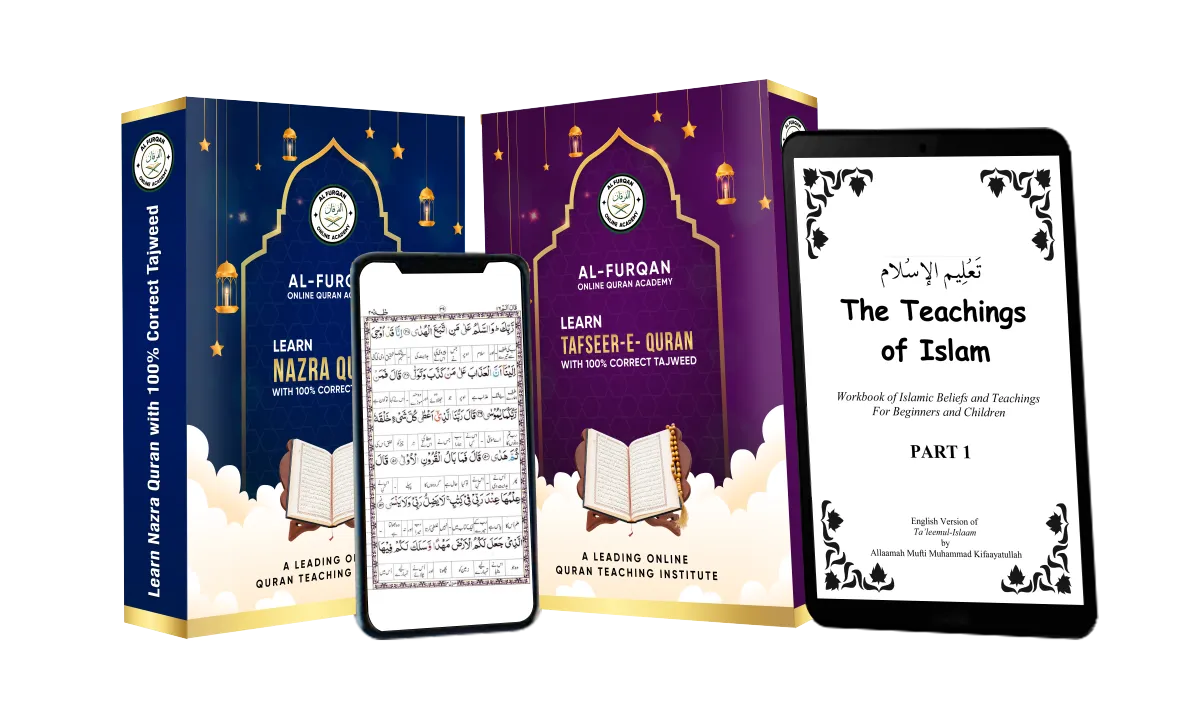
Like I mentioned before this training provides 20 classes a month
with One on One Live Training with experienced teacher in the Recitation of
Quran and Tajweed for only $50 a month. Timings are flexible with
customer support provided by the staff.
YES! TAKE THE 3 DAY FREE TRIAL! You pay only $2.5 per class 1-on-1 live ($50 per month)
Inside Of This New Program...
What Concepts Of Tajweed
You Will Learn!
Inside of this "Quran and Tajweed" Program I will be sharing with you 32 concepts related to Tajweed that will make your Quran pronunciation more clear and recitable with proper qirat.
Here's a sneak peak of what you'll discover and learn with Al Furqan Academy...
Section #1: Basic Concepts
Concept #1: "Tawuz" ;it is recited after "thana" in prayer before starting Quran or upon getting angry. Ta'awauz means to seek refuge with Allah from Satan, the accursed.
Concept #2: "Tasmia" ;it is recited after after the recitation of Ta'awwuz. Tasmia means to
start in the name of Allah who is gracious and merciful.
Concept #3: "Lahn-e-Jali" ;If a person falls into the Clear Mistakes, this is considered a sin and Ibn Taymiyyah even regarded it undesirable for a Student of Knowledge (i.e. someone who knows Tajweed) to pray behind a person who makes clear Mistakes in their Salaah.
Concept #4: "Lahn-e-Khafi" ;As for these unobvious mistakes, then the ruling on them is lighter and the recitation of a person falling into this type of mistake is regarded as lacking in completeness and prayer behind such a person is sound.
Concept #5: "Makharij Ul Huruf" ;It is the place of emitting the letter when pronouncing it that differentiates that specific letter from other letters. The five general regions are 'Al Jauf',
'Al Halq', 'Al Lisan', 'As Shafataan' and 'Al Khaishoom'.Concept #6: "Sifat Ul Huruf" ;directly translates to “characteristics of the letters”. It is important to study these to ensure they are present during recitation, such that letters emerging from the same makhraj (point of articulation) are differentiated. Perfection in pronunciation cannot be obtained unless both the sifah (characteristic/quality) and makhraj are correct.
Concept #7: "Sifat-e-Lazima" ;translated to ‘permanent characteristics’ is that characteristic which is part of the makeup of the letter, it cannot be removed from it; it is a right [which must be exercised] of the letter.
Concept #8: "Sifat-e-Aariza" ;translated to ‘redundant characteristics’ is that characteristic which “adds to” or “completes” a letter, such that if it were to be removed from it, it would not affect the actual letter; it is an additional right [which must be exercised] of the letter.
Concept #9: "Maddaat" ;Al-Madd is an Arabic word that means prolongation, and this means to extend the pronunciation of a letter, as the following. examples: (السماء) it is an Arabic word means “the sky”, and (ا)Is the place of Madd. (غفور)
Section #2: Diving Deeper
Concept #10: "Madd e Mutasil" ;defined as the ‘Connected’ Madd. This happens when hamza comes after one of Madd letters in the same word. In such a case, the reciter is required to elongate Madd up to 4 alif amount). The application is Wajib so we call it Madd Al-Wajib.
Concept #11: "Madd e Munfasil" ; This is defined as the separated Madd because one of the letters of mad and hamza (a reason of mad) comes in two successive words. This occurs when the letter Madd appears at the end of one word and the hamza appears at the beginning of the next word. In this case, the reciter can elongate up to four alif amount.
Concept #12: "Madd e Lazim" ;divided into two categories as permanent and temporary. Here, we deal with a permanent Sukoon. Let’s remember what it is: Permanent Sukoon: This type of sukoon is fixed and pronounced regardless if one stops or continues while reading a verse from Qur’an, visible on the letters not only in the form sukoon (٥) but also shaddah ( ّ ). (Hint: each shaddah contains a sukoon).
Concept #13: "Madd e Aariza" ; If a temporary sukoon appears on a word that comes after one of the Madd letters, then this is known as Mad Al-Aarid. Aarid means temporary, so we can translate it as Temporary Mad.
Concept #14: "Noon Sakin and Tanween" ;The letter noon – نْ without a vowel is called “noon as sakeena“. The tanween is the name given in Arabic to the double vocalization at the end of words and whose sound is that of noon as sakeena:
Concept #15: "Ikhfa" ;If any of the 15 letters of Ikhfaa’ come after Noon As-Sakinah or Tanween the word will be read between Ith’har and Idghaam with the existence of Ghunna, and the duration will be of two Harakah.
Concept #16: "Izhar" ;an Arabic word which means Manifestation. Izhar in Tajweed means to
pronounce the letter from its exit in a clear sound without stopping, silence, Ghunna or stress.Concept #17: "Idgham" ;If after Nûn As-Sakinah or Tanween comes any of the Idghaam letters, you will merge the Nûn Sakinah or Tanween into the letter. The emphasis will be on the succeeding letter because of the presence of Shaddah.
Concept #18: "Iqlab" ;an Arabic word that means Alternation or switching. And in Tajweed, Iqlab is one of the Tajweed rules. Iqlab rule means that Noon Sakinah or Tanween is switched to Meem sakinah in its pronunciation.
Concept #19: "Huruf Halqi" ;when it comes to reciting the Qur'an, the six letters simply must be read out loud with their associated sound and respective muscle group. In Qur'anic science, to not do so is disrespectful, close to a sin - if you have the means to do good do it, and could potentially change the meaning.
Concept #20: "Huruf Mustalia" ;Tafkheem ( تفخيم ) means 'fatness' or 'thickness' added on to a letter as a redundant characteristic (noting that it still must be exercised).
Concept #21: "Huruf Qalqala" ;the letter of Qalqalah comes at the end of a word and you stop on it, it will be pronounced with a strong echoing sound, and if the letter has a Shaddah it will be pronounced even stronger.
Concept #22: "Ghunna" ;In the Arabic language, there are diacritics [including the fat-ha, dhammah and kasrah] that can be the reason a word’s meaning changes completely. One of these diacritics is the shaddah. Insha Allah I will briefly explain what this is and move on to the Tajweed rule regarding the Noon and Meem letters that have a shaddah.
Concept #23: "Hadar" ;where the Quran is read quickly but respecting all rules of Tajweed.
Concept #24: "Tarteel" ;the Arabic word for hymnody. The term is commonly translated in reference to the Qur'an as recitation, "in proper order" and "with no haste."
Concept #25: "Madd e Aariza" ; If a temporary sukoon appears on a word that comes after one of the Madd letters, then this is known as Mad Al-Aarid. Aarid means temporary, so we can translate it as Temporary Mad.
Join The Program Now...
I'd like to enroll in the course now and learn the Quran
with 100% correct Tajweed!
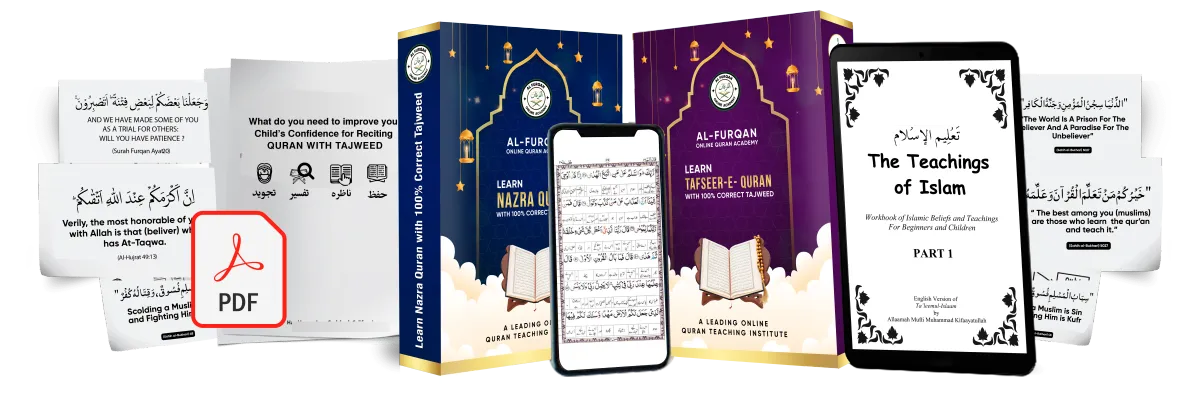
Like I mentioned before this training provides 20 classes a month with
One on One Live Training with Al Furqan in the Recitation of Quran and
Tajweed for only $50 a month. Timings are flexible with customer support
provided by the staff.
YES! TAKE THE 3 DAY FREE TRIAL! You pay only $2.5 per class 1-on-1 live ($50 per month)
Join Our Program Now...
I want to take initiative for my Deen and learn Quran with proper Tajweed!
YES! TAKE THE 3 DAY FREE TRIAL! You pay only $2.5 per class 1-on-1 live ($50 per month)
Its All About Balance, The Key To Success....
From:
Al Furqan Academy
Karachi, Pakistan
Truth be told; our lives are imbalanced...
The hierarchy of our priorities is shelved in a pyramid of confusion, disorder and societal pressure through which we deem what’s most important in the world.
We forget the fact that Quran, Namaz and Islam are the most imperative factors in our life, they define who we are.
Instead, we slave all day at a desk working a 9 to 5 believing this is the meaning of success.
Quite often people misinterpret the fact that devoting time to Islam is spending the whole day in constant sajdah and worship of Allah.
Being a good Muslim, reading the Quran and praying does not mean you have to neglect your priorities. It all narrows down to a question of balance.
Educating our children on living a balanced life is what separates the uneducated from the woke. A balanced life consists of 4 aspects...
◼Health
◼Wealth
◼Knowledge
◼Spirituality (Islam)
Our youth is so focused on the first 3 that it often forgets the value of the last one.
Consider this, the average human has 24 hours a day.
We spend 8 out of those sleeping, 8 working and let's assume 4 relaxing. We still have a solid 4 hours left in the day.
Out of those can we not even make our child devote 1.5 of them to deen? Can we not force him to study just 90 minutes of Quran so that he can make his Akhira?
Or are we that ignorant that we do not realize that there is a world beyond this and we will be held accountable for everything...
Are we not going to be questioned in front of Allah? R u not going to beg and cry for mercy as hell and Heavan stand opposite of each other. What will we say then? What justification can we offer to not raising our sons and daughters to be educated practicing Muslims...
This dunya is an illusion, a curtain full of sin hiding what must happen...
AL Furqan academy seeks to educate the youth of today on how to memorize the Quran, pray namaz and follow the basics of Islam so they can live a life of Barakah.
Make your children memorize the Quran so they can save their Hereafter.
Avail a 3 free day trial right now and help your child live a balanced life following Islam
Enroll Now
Do you know the reward for memorizing the Quran? PBUH – said: “The one who memorized the Quran shall come on the Day of Judgment and (the reward for reciting the Quran) says: ‘O Lord! Decorate him.” So he is donned with a crown of nobility. Then it says: “O Lord! Give him more!’ So he is donned with a suit of nobility. Then it says: “O Lord! Be pleased with him.’ So He is pleased with him and says: “Recite and rise up, and be increased in reward with every Ayah.” Narrated by Al-Tirmidhi, Said Hassan Sahih.
YES! TAKE THE 3 DAY FREE TRIAL! You pay only $2.5 per class 1-on-1 live ($50 per month)
Join The Program Now...
Enroll and take One on One Live Classes With
Teacher 4 times a week!
Like I mentioned before this training provides 20 classes a month
with One on One Live Training with experienced teacher in the Recitation of
Quran and Tajweed for only $50 a month. Timings are flexible with
customer support provided by the staff.
YES! TAKE THE 3 DAY FREE TRIAL! You pay only $2.5 per class 1-on-1 live ($50 per month)
Inside Of This New Program...
What Concepts Of Tajweed
You Will Learn!
Inside of this "Quran and Tajweed" Program I will be sharing with you 32 concepts related to Tajweed that will make your Quran pronunciation more clear and recitable with proper qirat.
Here's a sneak peak of what you'll discover and learn with Al Furqan Academy...
Section #1: Basic Concepts
Concept #1: "Tawuz" ;it is recited after "thana" in prayer before starting Quran or upon getting angry. Ta'awauz means to seek refuge with Allah from Satan, the accursed.
Concept #2: "Tasmia" ;it is recited after after the recitation of Ta'awwuz. Tasmia means to
start in the name of Allah who is gracious and merciful.
Concept #3: "Lahn-e-Jali" ;If a person falls into the Clear Mistakes, this is considered a sin and Ibn Taymiyyah even regarded it undesirable for a Student of Knowledge (i.e. someone who knows Tajweed) to pray behind a person who makes clear Mistakes in their Salaah.
Concept #4: "Lahn-e-Khafi" ;As for these unobvious mistakes, then the ruling on them is lighter and the recitation of a person falling into this type of mistake is regarded as lacking in completeness and prayer behind such a person is sound.
Concept #5: "Makharij Ul Huruf" ;It is the place of emitting the letter when pronouncing it that differentiates that specific letter from other letters. The five general regions are 'Al Jauf',
'Al Halq', 'Al Lisan', 'As Shafataan' and 'Al Khaishoom'.Concept #6: "Sifat Ul Huruf" ;directly translates to “characteristics of the letters”. It is important to study these to ensure they are present during recitation, such that letters emerging from the same makhraj (point of articulation) are differentiated. Perfection in pronunciation cannot be obtained unless both the sifah (characteristic/quality) and makhraj are correct.
Concept #7: "Sifat-e-Lazima" ;translated to ‘permanent characteristics’ is that characteristic which is part of the makeup of the letter, it cannot be removed from it; it is a right [which must be exercised] of the letter.
Concept #8: "Sifat-e-Aariza" ;translated to ‘redundant characteristics’ is that characteristic which “adds to” or “completes” a letter, such that if it were to be removed from it, it would not affect the actual letter; it is an additional right [which must be exercised] of the letter.
Concept #9: "Maddaat" ;Al-Madd is an Arabic word that means prolongation, and this means to extend the pronunciation of a letter, as the following. examples: (السماء) it is an Arabic word means “the sky”, and (ا)Is the place of Madd. (غفور)
Section #2: Diving Deeper
Concept #10: "Madd e Mutasil" ;defined as the ‘Connected’ Madd. This happens when hamza comes after one of Madd letters in the same word. In such a case, the reciter is required to elongate Madd up to 4 alif amount). The application is Wajib so we call it Madd Al-Wajib.
Concept #11: "Madd e Munfasil" ; This is defined as the separated Madd because one of the letters of mad and hamza (a reason of mad) comes in two successive words. This occurs when the letter Madd appears at the end of one word and the hamza appears at the beginning of the next word. In this case, the reciter can elongate up to four alif amount.
Concept #12: "Madd e Lazim" ;divided into two categories as permanent and temporary. Here, we deal with a permanent Sukoon. Let’s remember what it is: Permanent Sukoon: This type of sukoon is fixed and pronounced regardless if one stops or continues while reading a verse from Qur’an, visible on the letters not only in the form sukoon (٥) but also shaddah ( ّ ). (Hint: each shaddah contains a sukoon).
Concept #13: "Madd e Aariza" ; If a temporary sukoon appears on a word that comes after one of the Madd letters, then this is known as Mad Al-Aarid. Aarid means temporary, so we can translate it as Temporary Mad.
Concept #14: "Noon Sakin and Tanween" ;The letter noon – نْ without a vowel is called “noon as sakeena“. The tanween is the name given in Arabic to the double vocalization at the end of words and whose sound is that of noon as sakeena:
Concept #15: "Ikhfa" ;If any of the 15 letters of Ikhfaa’ come after Noon As-Sakinah or Tanween the word will be read between Ith’har and Idghaam with the existence of Ghunna, and the duration will be of two Harakah.
Concept #16: "Izhar" ;an Arabic word which means Manifestation. Izhar in Tajweed means to
pronounce the letter from its exit in a clear sound without stopping, silence, Ghunna or stress.Concept #17: "Idgham" ;If after Nûn As-Sakinah or Tanween comes any of the Idghaam letters, you will merge the Nûn Sakinah or Tanween into the letter. The emphasis will be on the succeeding letter because of the presence of Shaddah.
Concept #18: "Iqlab" ;an Arabic word that means Alternation or switching. And in Tajweed, Iqlab is one of the Tajweed rules. Iqlab rule means that Noon Sakinah or Tanween is switched to Meem sakinah in its pronunciation.
Concept #19: "Huruf Halqi" ;when it comes to reciting the Qur'an, the six letters simply must be read out loud with their associated sound and respective muscle group. In Qur'anic science, to not do so is disrespectful, close to a sin - if you have the means to do good do it, and could potentially change the meaning.
Concept #20: "Huruf Mustalia" ;Tafkheem ( تفخيم ) means 'fatness' or 'thickness' added on to a letter as a redundant characteristic (noting that it still must be exercised).
Concept #21: "Huruf Qalqala" ;the letter of Qalqalah comes at the end of a word and you stop on it, it will be pronounced with a strong echoing sound, and if the letter has a Shaddah it will be pronounced even stronger.
Concept #22: "Ghunna" ;In the Arabic language, there are diacritics [including the fat-ha, dhammah and kasrah] that can be the reason a word’s meaning changes completely. One of these diacritics is the shaddah. Insha Allah I will briefly explain what this is and move on to the Tajweed rule regarding the Noon and Meem letters that have a shaddah.
Concept #23: "Hadar" ;where the Quran is read quickly but respecting all rules of Tajweed.
Concept #24: "Tarteel" ;the Arabic word for hymnody. The term is commonly translated in reference to the Qur'an as recitation, "in proper order" and "with no haste."
Concept #25: "Madd e Aariza" ; If a temporary sukoon appears on a word that comes after one of the Madd letters, then this is known as Mad Al-Aarid. Aarid means temporary, so we can translate it as Temporary Mad.
Join The Program Now...
I'd like to enroll in the course now and learn the Quran
with 100% correct Tajweed!
Like I mentioned before this training provides 20 classes a month with
One on One Live Training with Al Furqan in the Recitation of Quran and
Tajweed for only $50 a month. Timings are flexible with customer support
provided by the staff.
YES! TAKE THE 3 DAY FREE TRIAL! You pay only $2.5 per class 1-on-1 live ($50 per month)