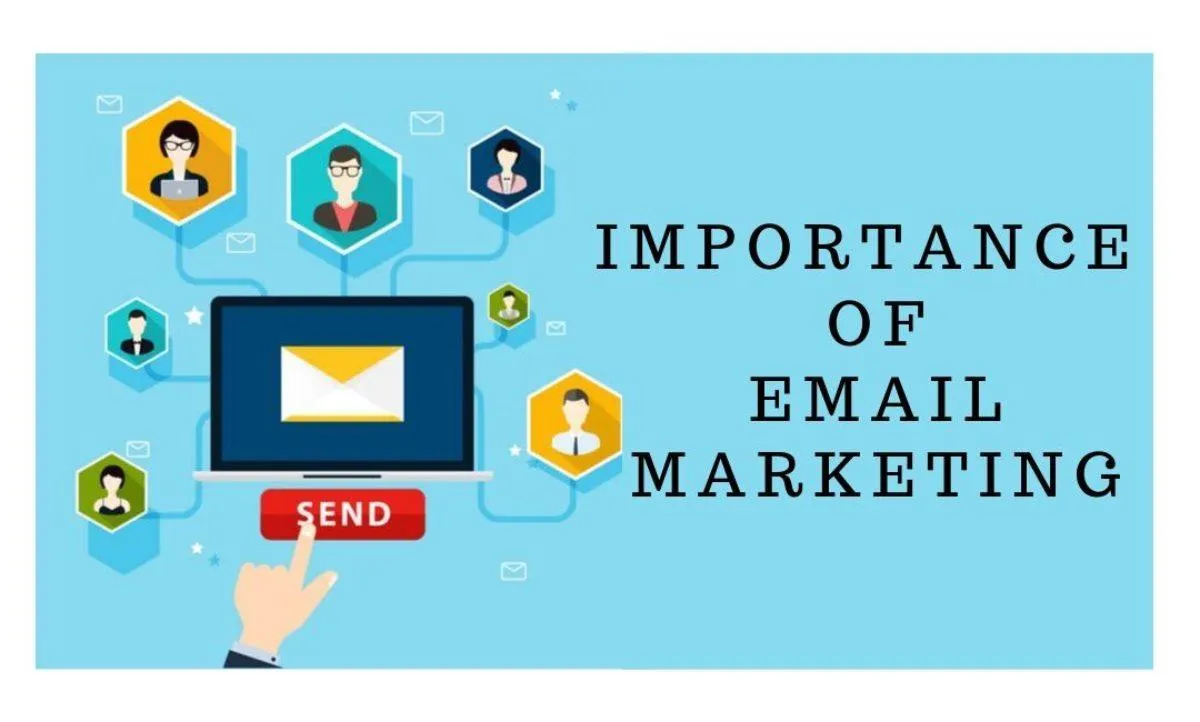
WHY EMAIL MARKETING IS SO IMPORTANT AND WHY YOUR COMPANY NEEDS IT RIGHT NOW
Effective email communication is one of the most important components of successful strategies for most organizations, even in the face of contemporary trends in online communication. Email marketing provides direct connection to the audience for small businesses as well as e-commerce ventures, fostering relationship-building and sales. The essence of email marketing identifies it as one of the finest ways to communicate with clients, taking into consideration automation and technological advances.
EMAIL MARKETING: WHAT IS IT?
It's a fantastic method of using email to share information with the right people, build relationships, and promote products. In essence, it is the user interface that allows users to receive content that is personalized for them based on their activities and most relevant to them. Email marketing is convenient for businesses because it is an affordable, easily customizable, and efficient communication tool.
They are distinct from other forms of advertising, like social media marketing, in that they provide a direct line of communication with recipients, increasing the likelihood of receiving noticed. According to an Errol survey, the average monthly search volume worldwide for email marketing has reached 90, 500, highlighting the necessity of email tactics for a variety of industry sectors.

THIS HELPS US TO COMPREHEND EMAIL MARKETING'S ADVANTAGES.
It is important to realize that pop-businesses, which are well-liked by the general public, can reap
certain rewards by using online email marketing. A few of the main justifications for concentrating on email marketing are as follows:
Here are a few of the primary justifications for thinking about email marketing:
1. Cost-Effective Marketing: The email marketing strategy's largest asset is its exceptionally high return on investment (ROI). Based on the study, the average return on investment obtained from using email marketing for every dollar spent is $42. This puts email campaigns in a unique category of the most economical
kinds of advertising when compared to other marketing channels.
2. Personalized Communication: Creating highly personalized material is made simple by marketing solutions that allow segmentation of emails. Ensuring that the appropriate message reaches the correct audience at the right time is another benefit of personalization. For instance, localized promotional offers that cater to a particular demographic are the focus of attention when using email marketing for small businesses.
3. Greater Engagement: Well-targeted emails that are grouped based on an individual's interests produce high open and click-through rates. Many businesses use these services to automate these kinds of communications to clients, eliminating the need for constant email monitoring. It is possible to significantly increase email open rates and business engagement rates when implemented properly.
4. Improving Retention of Customers: First off, email marketing prioritizes keeping its current customer base engaged even though it is a means of continuously seeking out new ones. These kinds of advertising strengthen relationships since they provide value in the form of deals, advice, or suggested products.
UPON A CASUAL EXAMINATION OF THE EMAIL MARKETING INDUSTRY, ONE IS STRUCK BY THE VARIETY OF WAYS THAT AN EMAIL MARKETING CAMPAIGN CAN BE IMPLEMENTED.
Put otherwise, there are a variety of email campaign kinds that can all be used as marketing tools.
Let's examine a few of the most popular kinds and the corresponding emails that are utilized for them:Given how common email is these days, it should come as no surprise that there are many different kinds of emails and the corresponding emails are as follows:
1. Promotional emails: These are sent out to advertise a new line of products, a particular product, a season, or a half-year. Typically, they have a compelling call to action that forces the receiver to visit your website or make a purchase. These emails are often newsletter-style deals, which are perfect for promoting special occasions, transient promotions, or discounts of any kind.
Email Type: These might be offers for sales, product announcements, or promotional newsletters.
2. Transactional Emails: There are two kinds of transactional emails: correspondence pertaining to campaigns and real-time correspondence whose dispatch is triggered by a particular customer's response to a campaign or business. Despite this, they are still useful for upselling or cross-selling similar products because the buyer is likely to find them interesting. However, because commercial emails convey more urgent and vital information than promotional emails, they can receive a better response than the latter.
Email Type: Order receipt, shipment information, account modifications, or password reset emails.
3. Welcome emails: These serve as a positive first impression by welcoming subscribers and clients
to mass mailing lists. A warm welcome email can make a strong first impression and assist you in gauging the level of engagement with your brand. To make your products and services easier for clients to navigate, they are most frequently used in order.
Email Type: To welcome someone who has recently joined the company, the Welcome Series is a series of emails sent to new users, and Onboarding is the initial series of emails in this series.
4. Drip Campaigns: This sort of mail consists of a series of dispatches that are typically sent out at predetermined intervals. Typically, the distribution of these emails is triggered by user actions, such adding an item to a shopping cart or subscribing to a list. The goal of this type of automated email marketing is to gradually move cold leads up the funnel until they are prepared to make a purchase.
Email Type: Cart recovery or abandoned cart emails, follow-up or lead nurturing emails, welcome or nurture emails,
5. Re-engagement emails: Designed to reconnect with customers who have stopped using the product or service, re-engagement emails offer deals or just a polite reminder to stick with the brand. These emails might have sales offers in an attempt to entice clients to come back to your establishment or surveys asking why they aren't doing business with you.
Email Type: also known as surveys, special offers, or reactivation campaigns.
FUNCTION OF EMAIL MARKETING PLATFORMS ON THE WEB
The majority of these efforts are run via email marketing platforms like HubSpot, Constant Contact, and Mailchimp, among others. These platforms have tools that let users plan, write, and schedule emails for distribution. They also have auto responders and analytics that let users determine how successful a campaign is.
However, what would happen if you created your website without understanding how to code using WordPress or Wix? Although they both offer email marketing features, the functionality that each service offers differs.
•WordPress: For example, Mailpoet is a plugin that integrates with other services, such as Mailchimp, and enables direct control of lists and campaign development from the WordPress dashboard. While certain capabilities are free of charge, the limitations on the quantity of emails that can be included in a post vary depending on the plugin or integration being utilized.
•Wix: Wix, for example, offers a feature called Wix Ascend that makes it simple to create email marketing campaigns. With Ascends simplest plans, you can send up to 5000 emails each month. The amount you can send depends on the kind of plan you choose to purchase.
•Mailchimp Free Email Cap: If I were to utilize Mailchimp, the free version as suggested would only allow me to send 500 emails per month to 500 subscribers. As your subscriber list grows, you'll probably hit the free email limit. At that point, you should think about switching to a premium plan to support your campaigns.
It's crucial to take into account the advantages and limitations of various email delivery systems,
particularly for companies looking to significantly scale their marketing automation email campaigns.

YOU'RE GOING TO LEARN THAT CHOOSING THE EMAIL MARKETING PLATFORM THAT WORKS BEST FOR YOUR COMPANY IS NOT A SIMPLE TASK.
And the worst part? The market is oversaturated. Think about the following while choosing a platform: A few things to think about when deciding between the two platforms are as follows:
1. Usability: The ease of creation is another feature of email templates. If you intend to send emails using a certain platform, be sure that platform has an easy-to-use interface and makes email reation simple. Certain businesses could need more straightforward solutions; in these cases, Wix or Mailchimp become desirable.
2. Automation Capabilities: Email appending makes it simple to send out bulk promotions, and as your business expands, using emails to market your items to clients becomes increasingly crucial. Platforms should have email automation available to increase productivity by automatically sending emails in response to user activities.
3. Cost and Scalability: The platform's price and its capacity to expand with your company's needs are two more important considerations. If you're just getting started, you'll probably choose a basic plan that has the fewest features and is priced lower or even free. You need a powerful, large-scale, effective tool, together with additional features like email segmentation and A/B testing, in
order to grow your subscriber base.
THE CURRENT EVOLUTION OF EMAIL MARKETING
Another form of marketing that has changed as a result of ongoing technological advancements is email marketing. Artificial intelligence is also being used more in email marketing, enabling companies to deliver more pertinent information, alter subject lines, and make educated guesses about client behavior. AI can reduce the time and effort required to make email marketing efficient and effective by automating any or all processes, from content creation to consumer reaction analysis.
In addition, as AI-enabled technology develops, businesses are finding new ways to increase the return on investment (ROI) of email marketing. These advancements maintain email marketing's interest and prominence, making it suitable for use as digital marketers' main tool going forward.

IN SUMMARY
In light of this, structural email marketing is still applicable in today's corporate world. Specifically, email marketing can offer remarkable advantages concerning expenses, customers, and growth factor. Whether you run a small or large firm, you need adhere to certain business improvement tactics. These include
Continued.....
An efficient strategy for a firm to expand and effectively compete in the market is to use email marketing to promote its goods and services. Because this type of email marketing is so versatile and comes in a variety of forms—from transactional to promotional—businesses can employ it. The majority of well-known programs, like
Mailchimp or Wix, provide basic services for free or extremely cheaply; as a business grows, more sophisticated choices can be added. A brand's success in the ever-expanding and complex realm of digital marketing can be ensured by incorporating mail campaign techniques with the appropriate tools, assisted by automation and artificial intelligence.
When you employ email marketing to its full potential, subscribers will instantly form a stronger link with your company, engagement will rise, and conversion rates will be higher if you send them emails at the appropriate times and with valuable information.
WHY EMAIL MARKETING IS SO IMPORTANT AND WHY YOUR COMPANY NEEDS IT RIGHT NOW
Effective email communication is one of the most important components of successful strategies for most organizations, even in the face of contemporary trends in online communication. Email marketing provides direct connection to the audience for small businesses as well as e-commerce ventures, fostering relationship-building and sales. The essence of email marketing identifies it as one of the finest ways to communicate with clients, taking into consideration automation and technological advances.
EMAIL MARKETING: WHAT IS IT?
It's a fantastic method of using email to share information with the right people, build relationships, and promote products. In essence,
it is the user interface that allows users to receive content that is personalized for them based on their activities and most relevant to them. Email marketing is convenient for businesses because it is an affordable, easily customizable, and efficient communication tool.
They are distinct from other forms of advertising, like social media marketing, in that they provide a direct line of communication with recipients, increasing the likelihood of receiving noticed.
According to an Errol survey, the average monthly search volume worldwide for email marketing has reached 90, 500, highlighting the necessity of email tactics for a variety of industry sectors.
THIS HELPS US TO COMPREHEND EMAIL MARKETING'S ADVANTAGES.
It is important to realize that pop-businesses, which are well-liked by the general public, can reap certain rewards by using online email marketing. A few of the main justifications for concentrating on email marketing are as follows:
Here are a few of the primary justifications for thinking about email marketing:
1. Cost-Effective Marketing: The email marketing strategy's largest asset is its exceptionally high return on investment (ROI). Based on the study, the average return on investment obtained from using email marketing for every dollar spent is $42. This puts email campaigns in a unique category of the most economical
kinds of advertising when compared to other marketing channels.
2. Personalized Communication: Creating highly personalized material is made simple by marketing solutions that allow segmentation of emails. Ensuring that the appropriate message reaches the correct audience at the right time is another benefit of personalization. For instance, localized promotional offers that cater to a particular demographic are the focus of attention when using email marketing for small businesses.
3. Greater Engagement: Well-targeted emails that are grouped based on an individual's interests produce high open and click-through rates. Many businesses use these services to automate these kinds of communications to clients, eliminating the need for constant email monitoring. It is possible to significantly increase email open rates and business engagement rates when implemented properly.
4. Improving Retention of Customers: First off, email marketing prioritizes keeping its current customer base engaged even though it is a means of continuously seeking out new ones. These kinds of advertising strengthen relationships since they provide value in the form of deals, advice, or suggested products.
UPON A CASUAL EXAMINATION OF THE EMAIL MARKETING INDUSTRY, ONE IS STRUCK BY THE VARIETY OF WAYS THAT AN EMAIL MARKETING CAMPAIGN CAN BE IMPLEMENTED.
Put otherwise, there are a variety of email campaign kinds that can all be used as marketing tools.
Let's examine a few of the most popular kinds and the corresponding emails that are utilized for them:Given how common email is these days, it should come as no surprise that there are many different kinds of emails and the corresponding emails are as follows:
1. Promotional emails: These are sent out to advertise a new line of products, a particular product, a season, or a half-year. Typically, they have a compelling call to action that forces the receiver to visit your website or make a purchase. These emails are often newsletter-style deals, which are perfect for promoting special occasions, transient promotions, or discounts of any kind.
Email Type: These might be offers for sales, product announcements, or promotional newsletters.
2. Transactional Emails: There are two kinds of transactional emails: correspondence pertaining to campaigns and real-time correspondence whose dispatch is triggered by a particular customer's response to a campaign or business. Despite this, they are still useful for upselling or cross-selling similar products because the buyer is likely to find them interesting. However, because commercial emails convey more urgent and vital information than promotional emails, they can receive a better response than the latter.
Email Type: Order receipt, shipment information, account modifications, or password reset emails.
3. Welcome emails: These serve as a positive first impression by welcoming subscribers and clients
to mass mailing lists. A warm welcome email can make a strong first impression and assist you in gauging the level of engagement with your brand. To make your products and services easier for clients to navigate, they are most frequently used in order.
Email Type: To welcome someone who has recently joined the company, the Welcome Series is a series of emails sent to new users, and Onboarding is the initial series of emails in this series.
4. Drip Campaigns: This sort of mail consists of a series of dispatches that are typically sent out at predetermined intervals. Typically, the distribution of these emails is triggered by user actions, such adding an item to a shopping cart or subscribing to a list. The goal of this type of automated email marketing is to gradually move cold leads up the funnel until they are prepared to make a purchase.
Email Type: Cart recovery or abandoned cart emails, follow-up or lead nurturing emails, welcome or nurture emails,
5. Re-engagement emails: Designed to reconnect with customers who have stopped using the product or service, re-engagement emails offer deals or just a polite reminder to stick with the brand. These emails might have sales offers in an attempt to entice clients to come back to your establishment or surveys asking why they aren't doing business with you.
Email Type: also known as surveys, special offers, or reactivation campaigns.
FUNCTION OF EMAIL MARKETING PLATFORMS ON THE WEB
The majority of these efforts are run via email marketing platforms like HubSpot, Constant Contact, and Mailchimp, among others. These platforms have tools that let users plan, write, and schedule emails for distribution. They also have auto responders and analytics that let users determine how successful a campaign is.
However, what would happen if you created your website without understanding how to code using WordPress or Wix? Although they both offer email marketing features, the functionality that each service offers differs.
•WordPress: For example, Mailpoet is a plugin that integrates with other services, such as Mailchimp, and enables direct control of lists and campaign development from the WordPress dashboard. While certain capabilities are free of charge, the limitations on the quantity of emails that can be included in a post vary depending on the plugin or integration being utilized.
•Wix: Wix, for example, offers a feature called Wix Ascend that makes it simple to create email marketing campaigns. With Ascends simplest plans, you can send up to 5000 emails each month. The amount you can send depends on the kind of plan you choose to purchase.
•Mailchimp Free Email Cap: If I were to utilize Mailchimp, the free version as suggested would only allow me to send 500 emails per month to 500 subscribers. As your subscriber list grows, you'll probably hit the free email limit. At that point, you should think about switching to a premium plan to support your campaigns.
It's crucial to take into account the advantages and limitations of various email delivery systems,
particularly for companies looking to significantly scale their marketing automation email campaigns.
YOU'RE GOING TO LEARN THAT CHOOSING THE EMAIL MARKETING PLATFORM THAT WORKS BEST FOR YOUR COMPANY IS NOT A SIMPLE TASK.
And the worst part? The market is oversaturated. Think about the following while choosing a platform: A few things to think about when deciding between the two platforms are as follows:
1. Usability: The ease of creation is another feature of email templates. If you intend to send emails using a certain platform, be sure that platform has an easy-to-use interface and makes email reation simple. Certain businesses could need more straightforward solutions; in these cases, Wix or Mailchimp become desirable.
2. Automation Capabilities: Email appending makes it simple to send out bulk promotions, and as your business expands, using emails to market your items to clients becomes increasingly crucial. Platforms should have email automation available to increase productivity by automatically sending emails in response to user activities.
3. Cost and Scalability: The platform's price and its capacity to expand with your company's needs are two more important considerations. If you're just getting started, you'll probably choose a basic plan that has the fewest features and is priced lower or even free. You need a powerful, large-scale, effective tool, together with additional features like email segmentation and A/B testing, in
order to grow your subscriber base.
THE CURRENT EVOLUTION OF EMAIL MARKETING
Another form of marketing that has changed as a result of ongoing technological advancements is email marketing. Artificial intelligence is also being used more in email marketing, enabling companies to deliver more pertinent information, alter subject lines, and make educated guesses about client behavior. AI can reduce the time and effort required to make email marketing efficient and effective by automating any or all processes, from content creation to consumer reaction analysis.
In addition, as AI-enabled technology develops, businesses are finding new ways to increase the return on investment (ROI) of email marketing. These advancements maintain email marketing's interest and prominence, making it suitable for use as digital marketers' main tool going forward.
IN SUMMARY
In light of this, structural email marketing is still applicable in today's corporate world. Specifically, email marketing can offer remarkable advantages concerning expenses, customers, and growth factor. Whether you run a small or large firm, you need adhere to certain business improvement tactics. These include
Continued....
An efficient strategy for a firm to expand and effectively compete in the market is to use email marketing to promote its goods and services. Because this type of email marketing is so versatile and comes in a variety of forms—from transactional to promotional—businesses can employ it. The majority of well-known programs, like Mailchimp or Wix, provide basic services for free or extremely cheaply; as a business grows, more sophisticated choices can be added. A brand's success in the ever-expanding and complex realm of digital marketing can be ensured by incorporating mail campaign techniques with the appropriate tools, assisted by automation and artificial intelligence.
When you employ email marketing to its full potential, subscribers will instantly form a stronger link with your company, engagement will rise, and conversion rates will be higher if you send them emails at the appropriate times and with valuable information.